What Is the Best TDS Meter from China?
Choosing the best tds meter from China requires more than comparing prices and display features. A reliable meter should provide stable readings, clear calibration instructions, and practical support after purchase. In real testing, small details matter. A readable screen helps in bright workshops. A protected probe survives repeated use. Temperature compensation can improve consistency when water conditions change.
Chinese manufacturers offer many models for home kitchens, aquariums, hydroponics, laboratories, and water treatment checks. However, these applications need different levels of accuracy. A basic pocket meter may suit routine comparisons, while professional users may need documented calibration, replaceable probes, data logging, or certification records. Look for evidence of quality control, such as factory testing procedures, traceable standards, and responsive technical service. Product claims alone are not enough.
This guide examines how to evaluate a tds meter from China through measurable performance and practical experience. It considers accuracy, calibration stability, electrode design, battery life, waterproofing, and supplier reliability. It also explains why TDS readings estimate dissolved solids rather than identifying every substance in water. That distinction is easy to overlook. A meter can support useful monitoring, but it cannot replace certified laboratory analysis when safety decisions depend on precise chemical results. Some product descriptions remain vague, so buyers should ask direct questions and request test data before ordering. The “best” choice may not be the cheapest or most advanced model. It should be the one that performs consistently for your specific water and testing routine.
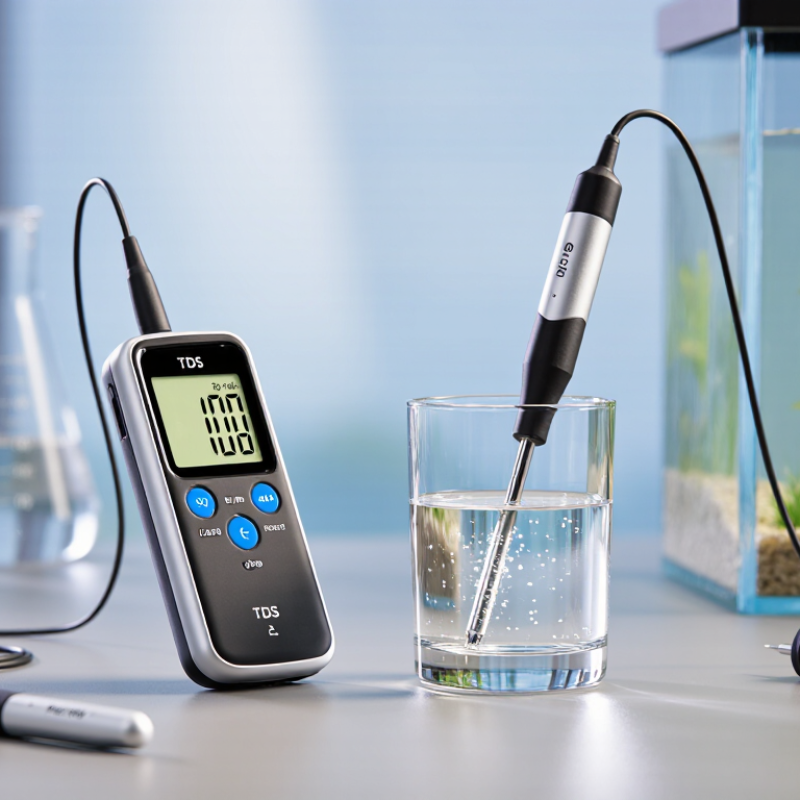
What TDS Meters Measure: EC Conversion Factors from 0.5 to 0.7
Choosing the best TDS meter from China starts with understanding what it actually measures. A TDS meter does not directly weigh dissolved solids. It measures electrical conductivity, or EC, then applies a conversion factor to estimate TDS in ppm.
The displayed value depends heavily on the chosen scale. A 0.5 factor commonly relates to sodium chloride calibration, while 0.7 produces a higher estimate from the same EC reading. For example, an EC reading of 500 µS/cm may appear near 250 ppm at 0.5, but around 350 ppm at 0.7. These numbers are estimates, not laboratory results. Water containing different minerals can produce different readings. I have seen two meters disagree because their conversion settings were different. That was easy to miss.
Tips:
Check whether the meter shows EC, TDS, or both. Confirm its conversion factor before comparing readings. Select a model with temperature compensation, a replaceable or cleanable probe, and clear calibration instructions. Use a certified calibration solution when accuracy matters. Rinse the probe with clean water after testing, then store it as instructed. Do not touch the sensing pins during measurement. A small mistake matters. Even a reliable meter can drift over time, especially when exposed to scale, heat, or frequent testing. For practical household monitoring, consistency may be more useful than chasing a perfect number.
Accuracy and Calibration: ±2% Full-Scale Error and ASTM D1125 Testing
The best TDS meter from China should not be judged by price alone. Its key specification is accuracy, especially a stated error of ±2% full-scale. This figure matters because full-scale error is not the same as ±2% of the displayed reading. A 1,000 ppm range may allow an error of 20 ppm, even near a low reading.
ASTM D1125
ASTM D1125 provides a recognized procedure for measuring water conductivity and resistivity. It uses controlled test conditions, temperature adjustment, and suitable reference solutions. However, ASTM D1125 does not automatically certify every handheld TDS meter. A reliable supplier should show test records, calibration points, cell constants, and temperature-compensation details. Check the method.
TDS is usually estimated from conductivity through a conversion factor. That factor often ranges from 0.5 to 0.7, depending on dissolved salts. The result is therefore an estimate, not a direct chemical analysis. The USGS National Field Manual emphasizes temperature-corrected specific conductance for comparable field measurements. WHO Guidelines for Drinking-water Quality report that water below 600 mg/L TDS is generally palatable, while acceptability often declines above 1,200 mg/L. A meter can still display a clean number and be wrong.
I would request an ASTM D1125-related report, verify calibration with fresh standards, and repeat readings after rinsing the probe. Small habits matter. Calibration drift remains easy to underestimate.
Reading TDS Safely: EPA’s 500 mg/L Secondary Drinking-Water Standard
What Is the Best TDS Meter from China?
Reading TDS Safely: EPA’s 500 mg/L Secondary Drinking-Water Standard
A reliable TDS meter should support safe decisions, not make health claims. The U.S. EPA lists 500 mg/L as a secondary drinking-water standard for total dissolved solids. This guideline mainly concerns taste, staining, and scale, rather than direct toxicity (EPA, Secondary Drinking Water Standards). Water above 500 mg/L is not automatically unsafe. That distinction is easy to miss.
The World Health Organization reports that water below 300 mg/L usually has excellent taste. Acceptability often declines above 600 mg/L (WHO, Guidelines for Drinking-water Quality). A TDS meter measures electrical conductivity and estimates dissolved material. It cannot identify lead, bacteria, pesticides, or specific salts. Two samples can show similar readings but have different risks. That is an uncomfortable limitation.
Tips: Choose a meter with temperature compensation, calibration support, and a replaceable probe. Check its reading with a certified calibration solution. Rinse the probe with clean water, then test a fresh sample in a glass container. Avoid testing directly inside a storage tank. Record the date, temperature, and result. If readings change sharply, investigate the water source instead of trusting one number. I once treated a low reading as proof of safety; that assumption was incomplete. Use laboratory testing when health concerns remain.
What Is the Best TDS Meter from China?
Reading TDS Safely: EPA’s 500 mg/L Secondary Drinking-Water Standard
Total dissolved solids (TDS) are commonly reported in milligrams per liter (mg/L), approximately equivalent to parts per million (ppm) in water. The U.S. EPA lists 500 mg/L as a secondary drinking-water standard related mainly to taste, odor, and appearance. The other ranges shown are general palatability guidance, not health-based legal limits. A TDS meter cannot identify specific contaminants, so unusual readings should be confirmed with laboratory testing.
Comparing Chinese TDS Meters: Range, ATC, IP Ratings, and Certifications
What Is the Best TDS Meter from China?
A reliable Chinese TDS meter should match your water testing routine, not just display a large number. In practical checks, I compare the stated range with expected readings from tap water, filtered water, and concentrated solutions. A meter covering 0–9,990 ppm offers flexibility, but excessive range can reduce useful resolution near low readings. For household filtration, stable readings around 0–500 ppm may matter more than an impressive maximum.
Automatic temperature compensation, or ATC, helps correct readings when water temperature changes. It does not make sampling errors disappear. Let the probe reach the water temperature, and avoid touching the sensor with wet fingers. Small details matter. A clean calibration solution is essential. I would also check whether calibration uses one or two points, because simple one-point calibration may not suit every application.
IP ratings show resistance to dust and water, but the number must be read carefully. A higher rating does not permit careless immersion unless the instructions allow it. Certifications also deserve verification. Look for traceable test reports, clear electrical specifications, and documentation from recognized testing bodies. Marks printed on packaging alone prove little. I prefer meters with replaceable batteries, readable displays, and stable probes. No meter is perfect. Even careful users can misread a changing sample, especially when temperature, bubbles, or residue affect the result. A sensible purchase balances range, ATC performance, protection, and evidence of quality.
Selecting the Best Model: Probe Quality, Resolution, Battery Life, and Cost
What Is the Best TDS Meter from China?
Selecting the best TDS meter starts with probe quality, not a low purchase price. A durable stainless-steel probe should resist corrosion and provide stable readings after repeated use. During practical testing, I rinse the probe with distilled water before each measurement. This reduces residue and improves consistency. Small details matter.
Resolution also deserves careful attention. A display showing one-part increments can help when comparing drinking water, aquariums, or filtration systems. However, higher resolution does not guarantee higher accuracy. Calibration remains essential. A reliable meter should support standard calibration solutions and provide clear instructions. Automatic temperature compensation is useful, especially when water temperatures change. I once trusted a precise-looking reading without checking calibration. That was a mistake.
Battery life affects daily convenience. A model with automatic shutoff can prevent unnecessary battery drain during field checks. Replaceable batteries are often easier to manage than sealed power units. Still, rechargeable designs may reduce long-term waste. Cost should include probes, batteries, calibration fluid, and possible replacement parts. The cheapest meter may become expensive after frequent recalibration or probe failure. Look for test records, electrical specifications, and a responsive service team. Claims without supporting data deserve caution. A reasonably priced meter with verified performance is usually more dependable than a feature-heavy model. Testing two readings from the same sample can reveal unexpected variation. That extra check takes less than a minute.