

2026 Top TDS Meter Types for Global Buyers?
Global buyers are rethinking how they measure dissolved solids in homes, laboratories, farms, and commercial water systems. A modern tds meter is no longer a single-purpose pocket tool. It may be a pen tester, benchtop instrument, inline monitor, or Bluetooth-enabled device.
The World Health Organization’s Guidelines for Drinking-water Quality explain that total dissolved solids mainly affect taste and acceptability. They do not provide a complete safety diagnosis. WHO guidance indicates that water below 600 mg/L is generally more palatable, while levels above 1,200 mg/L may taste unpleasant. That distinction matters. A high reading does not identify the exact contaminant.
The United Nations World Water Development Report 2024 states that 2.2 billion people lacked safely managed drinking water in 2022. Reliable field testing therefore has practical value, especially where laboratory access is limited. Dr. Joseph Cotruvo, a recognized water-quality specialist and former U.S. Environmental Protection Agency scientist, emphasizes the central limitation: “TDS is not a specific contaminant; it is a measure of dissolved material in water.” Buyers should treat that principle seriously.
This guide compares the leading tds meter types for global purchasing decisions. It examines accuracy, calibration, temperature compensation, probe durability, display design, connectivity, and maintenance demands. Pocket meters are convenient. Benchtop models offer stronger control. Inline units support continuous monitoring.
No instrument is perfect.
Some low-cost meters drift quickly in hard water. Some premium models still need proper calibration and cleaning. The right choice depends on the water source, testing frequency, operating environment, and required evidence quality. A cheaper meter may save money initially, but unreliable readings can create larger operational costs later.
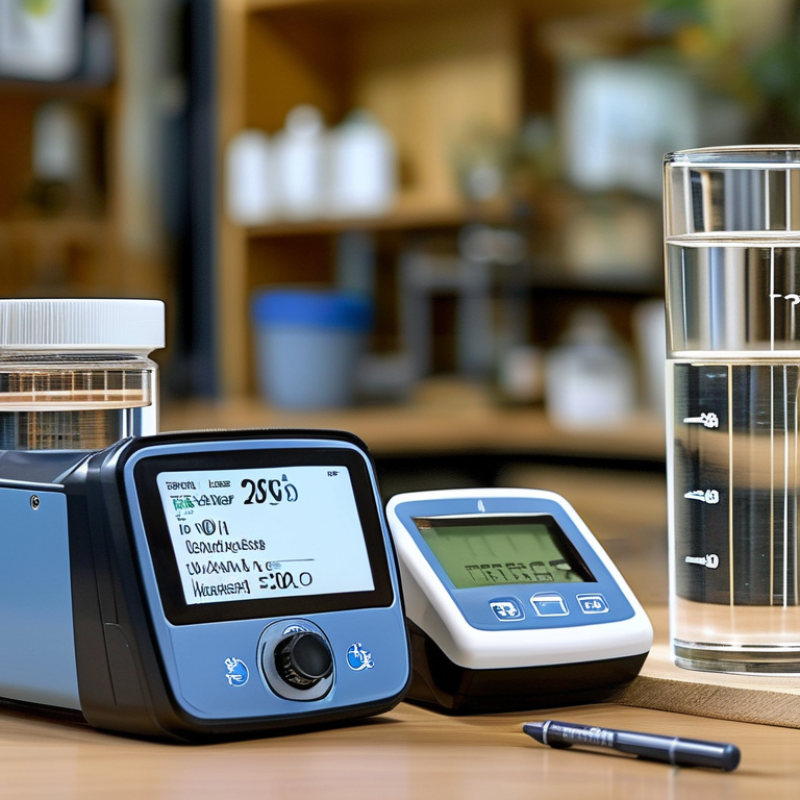
TDS Measurement Basics: ppm, EC, and the 0–9999 ppm Range
2026 Top TDS Meter Types for Global Buyers
TDS meters estimate dissolved solids through electrical conductivity, or EC. The displayed value usually appears in ppm, meaning parts per million. A reading of 150 ppm may suggest relatively low mineral content, while 800 ppm indicates a heavier dissolved load. However, ppm is not a direct laboratory measurement. It is a calculated estimate.
Most handheld meters use a conversion factor, often near 0.5, 0.64, or 0.7. The same water can therefore show different ppm values on different meters. EC, measured in microsiemens per centimeter, offers a more direct conductivity reading. For technical comparisons, EC can be more reliable. The 0–9999 ppm range suits household checks, aquariums, hydroponic solutions, and basic process monitoring. Very low readings may require a meter with better resolution.
Tips: Check the measurement mode before comparing results. Calibrate with a suitable standard solution. Rinse the probe after every test. Keep the sample near room temperature. Record both ppm and EC when possible.
In practical testing, temperature changes can shift readings noticeably. A cold glass and a warm tank may not match. I once trusted a stable number too quickly; repeating the test exposed a dirty probe. That small mistake mattered. Buyers should examine accuracy, automatic temperature compensation, range, display clarity, and calibration support. A wide range is useful, but it does not guarantee precision at the lower end. Choose the meter for the water and decision involved.
2026 Top TDS Meter Types for Global Buyers? – TDS Measurement Basics: ppm, EC, and the 0–9999 ppm Range
| Meter Type | Primary Measurement | Typical Display Range | Typical Accuracy* | Best-Fit Applications | Main Advantages | Important Limitations |
|---|---|---|---|---|---|---|
| Pen-Style TDS Meter | TDS estimate derived from electrical conductivity (EC) | 0–999 ppm or 0–9999 ppm | About ±2% to ±3% of full scale | Drinking water checks, aquariums, hydroponics, household filtration | Compact, low-cost, fast to use, easy to carry | TDS is calculated rather than directly measured; limited temperature compensation and durability on basic models |
| Handheld EC/TDS Meter | EC, with selectable TDS conversion | EC: approximately 0–20.00 mS/cm; TDS: up to about 12,800 ppm, depending on conversion factor | About ±1% to ±2% of full scale | Water treatment, pools, aquaculture, nutrient solutions, field testing | Wider range, temperature compensation, replaceable or protected probes on many models | Requires regular calibration and cleaning; TDS readings depend on the selected conversion scale |
| Professional Portable Meter | EC, resistivity, temperature, and calculated TDS | EC: up to approximately 100 mS/cm; TDS range varies by probe and scale | Often about ±0.5% to ±1% of reading | Environmental sampling, laboratories, process checks, commercial water systems | Improved stability, data logging, multiple calibration points, better probe options | Higher purchase cost and more demanding maintenance procedures |
| Benchtop EC/TDS Meter | High-resolution EC with temperature and TDS calculations | Common EC ranges from 0–20 mS/cm to 0–200 mS/cm | Often about ±0.5% of reading or better | Quality-control laboratories, research, formulation, production testing | Stable measurements, larger display, advanced calibration, repeatable testing | Not designed for mobile sampling; requires a controlled workspace and suitable glassware |
| Inline or Panel-Mount TDS/EC Controller | Continuous EC, temperature, and optional TDS calculation | Commonly selected for a process-specific EC range, such as 0–20 mS/cm | Typically about ±1% to ±2% of full scale | Reverse-osmosis systems, water treatment lines, hydroponic dosing, industrial processes | Real-time monitoring, alarms, relay control, reduced manual sampling | Installation, flow-cell design, sensor fouling, and system calibration affect performance |
| High-Range Conductivity Meter | EC for saline, brackish, or concentrated process water | Approximately 0–200 mS/cm or higher, depending on the sensor | Often about ±1% to ±2% of full scale | Brine monitoring, cooling systems, wastewater, aquaculture, industrial process control | Handles conductivity levels beyond the practical range of basic 0–9999 ppm meters | TDS conversion becomes less representative when water contains a complex mixture of ions |
Measurement Basics for Global Buyers
- ppm: In dilute water solutions, ppm is commonly used as an approximate equivalent to milligrams per liter (mg/L). A TDS meter normally estimates ppm from EC; it does not identify or weigh every dissolved substance separately.
- EC: Electrical conductivity is measured in microsiemens per centimeter (µS/cm) or millisiemens per centimeter (mS/cm). Higher ionic content generally produces higher EC.
- Conversion: A common approximation is TDS (ppm) ≈ EC (µS/cm) × 0.5–0.7. The exact factor depends on the instrument scale and the chemical composition of the water.
- 0–9999 ppm range: This display range is useful for many household, hydroponic, aquaculture, and general water-checking tasks, but it should not be treated as universal accuracy across the entire range.
- Temperature: Conductivity changes with temperature. For comparable results, choose automatic temperature compensation or measure samples at a consistent reference temperature, commonly 25°C.
*Accuracy figures are typical market specifications and vary by sensor, calibration standard, temperature, sample composition, and manufacturer test conditions.
Related Posts
-
7 Best TDS Meters for Accurate Water Testing
-
Best Home Water Test Kit for Safe Drinking Water Quality?
-

Top 10 Boiler Water Treatment Solutions for Global Buyers?
-
How to Choose the Best At Home Water Test Kit for You?
-
Best Chlorine Dioxide Formula for Effective Disinfection?
-
What is a Drinking Water Test and Why is it Important?