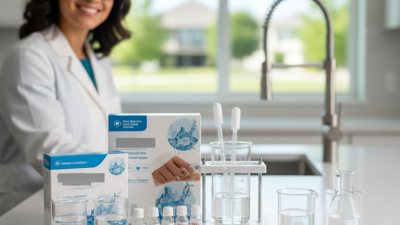
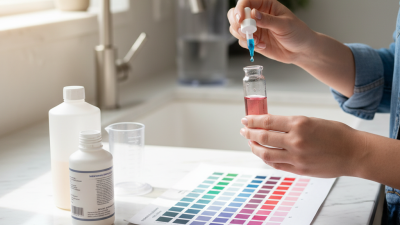
2026 Best Water Hardness Test Kits for Global Buyers
Water hardness rarely looks dramatic. It appears as white scale around a kettle, cloudy glassware, or stiff laundry. Yet these signs can indicate different calcium and magnesium levels. For global buyers, a dependable water hardness test is more than a convenient strip. It supports product selection, boiler protection, aquarium care, and household treatment decisions.
The U.S. Geological Survey classifies water above 120 milligrams per liter as hard and above 180 as very hard, measured as calcium carbonate. The World Health Organization reports no health-based guideline value for hardness, but recognizes its operational importance and contribution to calcium and magnesium intake. Those findings make method quality essential. Drops, digital meters, and reagent strips do not deliver identical accuracy. ISO 6059 and Standard Methods guidance also remind purchasers to consider sampling, calibration, and endpoint control.
Water-quality specialist Dr. John A. Cotruvo has offered a useful principle: “Good water-quality decisions depend on reliable measurements.” That idea fits this market closely. A kit may promise laboratory-style precision, but temperature, expired reagents, poor lighting, and user technique can quietly distort results. Small details matter. A blue endpoint can be easy to miss.
This guide compares 2026 water hardness test kits for international buyers, including test range, resolution, replacement costs, language support, and field practicality. It is not a perfect ranking. Regional water chemistry changes, and manufacturer claims deserve verification. Buyers should match the kit with their actual source water, testing frequency, and acceptable uncertainty.
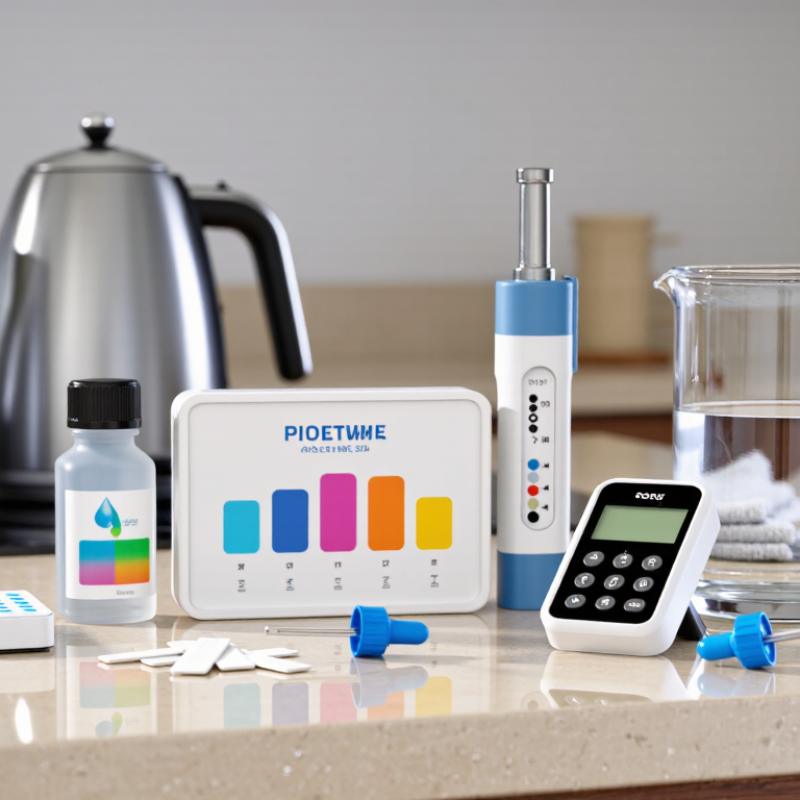
What Is Water Hardness and Why Does It Matter?
Water hardness measures dissolved calcium and magnesium, usually reported as milligrams per liter of calcium carbonate. The US Geological Survey classifies water below 60 mg/L as soft, 61–120 mg/L as moderately hard, 121–180 mg/L as hard, and above 180 mg/L as very hard. These minerals are invisible. Their effects are not. A white ring may form inside a kettle, while soap produces less foam on a wet hand.
Hardness is mainly a practical and operational concern. The World Health Organization’s 2022 Guidelines for Drinking-water Quality do not assign a health-based limit for hardness. However, hard water can create scale in heaters, pipes, faucets, and industrial equipment. Very soft water may also increase corrosion under certain conditions. A test result should therefore be read alongside pH, temperature, alkalinity, and local water chemistry. One number rarely explains everything.
For global buyers, test kits should match the region’s reporting units and expected hardness range. Titration kits can provide useful precision, while test strips offer faster screening. Follow the sample volume carefully. Rinse the container, use fresh water, and read the endpoint under consistent lighting. A color change can be subtle. That result can mislead. The USGS classification is useful, but it is not a universal equipment limit; manufacturers and laboratories may apply different thresholds. Field testing is practical, yet periodic laboratory verification remains sensible, especially for wells, hotels, food facilities, and closed heating systems.
How to Choose the Right Water Hardness Test Kit
How to Choose the Right Water Hardness Test Kit
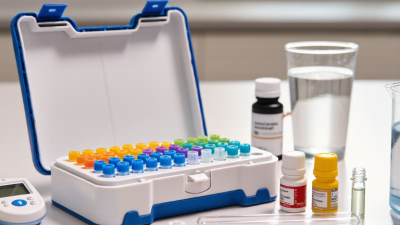
Choosing a water hardness test kit starts with the testing purpose. Home users may prefer simple strips for quick screening. Technicians often need titration kits for clearer, repeatable results. Digital meters can offer convenience, but they require calibration and careful cleaning. Check whether the kit measures calcium hardness, total hardness, or both. These values are not always interchangeable.
Look at the measurement range and reporting unit before buying. Water hardness may appear as ppm, mg/L, or degrees of hardness. A kit designed for very soft water may become inaccurate in mineral-rich regions. Confirm the instructions, sample volume, reaction time, and included reagents. I have seen small timing errors change the color endpoint. That detail is easy to overlook. It may affect treatment decisions.
Tips: Test a cold, fresh sample in a clean container. Keep reagents sealed and check their expiration date. For titration tests, add drops slowly near the endpoint. Compare the result with a laboratory report when accuracy matters. Store the kit away from heat and sunlight. Strips are convenient, but moisture can damage them. Some instructions still feel unclear, so record the method and conditions beside each result. This makes future comparisons more reliable.
2026 Best Water Hardness Test Kits for Global Buyers
Choose a test kit that covers the expected hardness level of the target water source. The chart uses the USGS classification of hardness, expressed as mg/L (ppm) as CaCO₃.
For international buyers, a kit with a range extending beyond 180 mg/L as CaCO₃ is suitable for very hard water. Titration kits are generally preferable when more precise results are needed, while test strips are convenient for quick screening.
Which Test Methods Are Available for Global Buyers?
Global buyers can choose three practical water hardness test methods: strips, drop-count titration, and digital photometry. The USGS classifies water as soft below 60 mg/L, moderately hard at 61–120 mg/L, hard at 121–180 mg/L, and very hard above 180 mg/L as calcium carbonate. This scale helps comparison, but regional laboratories may use different reporting units. Check the unit carefully.
Color-change strips are the simplest option. They need only a clean cup and a few seconds. They suit household screening, field visits, and large sample batches. However, humidity can damage unused strips, while poor lighting may distort color matching. Drop-count kits use EDTA reagent until the sample changes color. APHA Standard Methods 2340 C recognizes EDTA titration as a professional hardness method. It offers better resolution, but users must count drops accurately and avoid contaminated glassware.
Digital photometric kits measure color intensity after adding reagents. They can reduce visual judgment and store repeatable readings. ASTM D1126 covers laboratory determination of water hardness, supporting standardized measurement practices. Still, calibration matters. A scratched vial can mislead the sensor. The WHO Guidelines for Drinking-water Quality state that hardness has no health-based guideline value, so testing often targets scale control, treatment settings, or equipment protection. An imperfect test is still useful when its limits are recorded.
Best Water Hardness Test Kit Features for Different Applications
Choosing a water hardness test kit depends on the application, not only the advertised accuracy. USGS classifies water as soft below 60 mg/L, moderately hard at 61–120 mg/L, hard at 121–180 mg/L, and very hard above 180 mg/L as calcium carbonate. These ranges help buyers select a kit with a suitable measurement scale. A household user may need simple drop-count titration. A boiler operator needs finer resolution near its treatment limit.
For drinking-water checks, clear color changes and readable instructions matter most. The World Health Organization identifies hardness mainly as an operational and acceptability concern, rather than a health-based limit. For laboratories, APHA Standard Methods support titrimetric procedures using controlled reagents and documented sampling. Consistent sample volume is essential. Small errors can change the result.
Industrial cooling systems require kits that tolerate repeated testing, include replacement reagents, and record results easily. Digital meters can reduce visual judgment, but they still require calibration and clean electrodes. Field teams may prefer compact kits with sealed bottles and a low-light color scale. A color chart can mislead under warm lighting. No kit is perfect. Water temperature, stale reagents, and unclean glassware can distort readings. Buyers should check detection range, resolution, reagent shelf life, and compliance with recognized testing methods before comparing price.