

Top 10 pH Testers for Water Buying Guide
Choosing the right ph tester for water is more than comparing screen sizes, prices, and advertised accuracy. A trustworthy meter must handle calibration, temperature changes, electrode storage, and repeated field use. Tap water, aquarium water, pools, wells, and hydroponic solutions can produce very different readings. The device should match the water, not merely the budget.
The World Health Organization’s Guidelines for Drinking-water Quality treats pH mainly as an operational parameter rather than a direct health limit. However, it notes that pH commonly influences disinfection, corrosion, and treatment performance. The U.S. Environmental Protection Agency lists 6.5 to 8.5 as a secondary standard for drinking water. That range is useful, but it is not a universal safety verdict. A reading outside it deserves investigation, not panic.
John D. Hem, a respected USGS hydrologist, wrote, “pH is a measure of the hydrogen-ion activity in a solution.” That definition explains why proper calibration matters. A meter can display 7.00 and still be wrong. Dirty probes, expired buffer solutions, and poor storage quietly distort results. I have seen inexpensive testers perform well in fresh calibration tests, then drift after several wet measurements. That limitation deserves attention.
This guide compares ten leading options through accuracy, calibration design, response time, durability, maintenance, and value. It also considers practical details, such as whether the probe fits a narrow bottle or survives a damp toolbox. No tester is perfect. The best choice is the one that produces dependable readings within your actual testing routine.
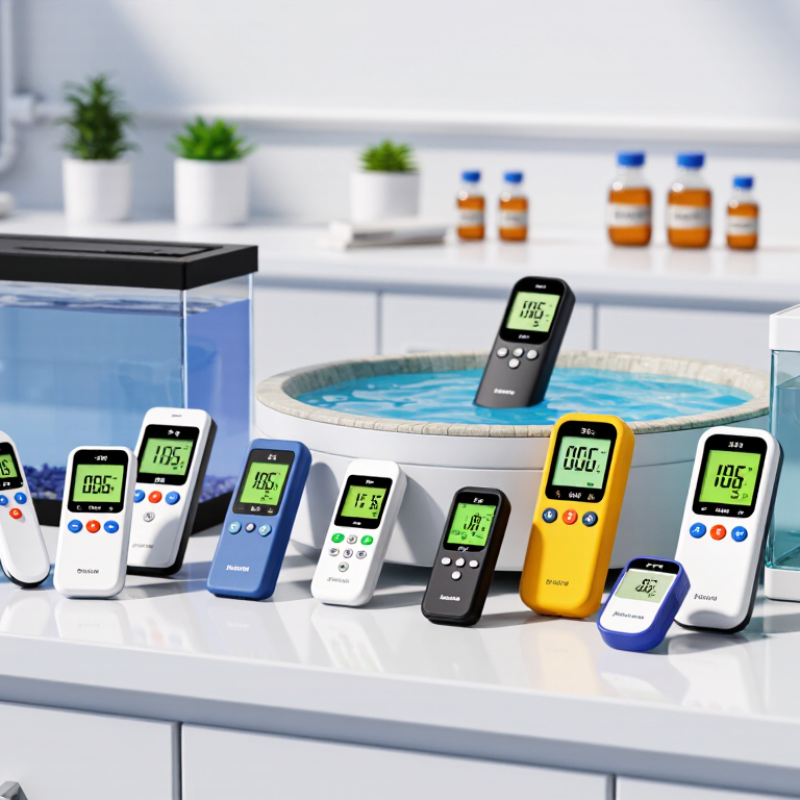
Understanding pH Testers and Their Role in Water Testing
Understanding pH Testers and Their Role in Water Testing
Water pH is more than a number on a screen. It indicates whether water is acidic, neutral, or alkaline, affecting corrosion, disinfection, taste, and aquatic conditions. The World Health Organization reports that drinking-water pH commonly falls between 6.5 and 8.5, although it sets no health-based limit for pH itself. The United States Environmental Protection Agency also lists 6.5–8.5 as a secondary drinking-water standard.
Small differences matter. A reading of 6.2 may signal pipe corrosion risks, while 8.8 can reduce chlorine effectiveness. A reliable tester should offer suitable resolution, automatic temperature compensation, and simple two- or three-point calibration. Field users should also check electrode replacement costs, waterproof protection, and battery stability. A low price can become expensive.
Calibration is often underestimated. Standard Methods for the Examination of Water and Wastewater recommends using certified buffer solutions and appropriate quality-control procedures. Rinse the probe with clean water, avoid wiping the glass bulb harshly, and record the sample temperature. Do not trust a perfect-looking reading blindly. Dirty electrodes, expired buffers, and air bubbles can distort results. The instrument is only one part of the measurement.
In a top-ten comparison, prioritize repeatability over flashy features. Testers with 0.01 pH resolution look precise, but resolution is not accuracy. Ask for stated accuracy, calibration range, and storage instructions before buying. Even experienced users occasionally skip a calibration check. That mistake is easy to make.
Top 10 pH Testers for Water Buying Guide - Understanding pH Testers and Their Role in Water Testing
| Rank | Tester Type | Typical pH Range | Typical Resolution | Typical Accuracy | Calibration Method | Temperature Compensation | Best Water-Testing Uses | Main Advantages | Important Limitations |
|---|---|---|---|---|---|---|---|---|---|
| 1 | Professional Waterproof Pen Meter | 0.00–14.00 pH | 0.01 pH | Approximately ±0.01 to ±0.05 pH | Two- or three-point calibration using pH 4.01, 7.00, and 10.01 buffers | Usually automatic temperature compensation | Drinking water, aquariums, hydroponics, pools, and laboratory field checks | High portability, quick readings, replaceable or serviceable electrode on many models | Requires regular calibration, electrode storage solution, and careful rinsing between samples |
| 2 | Laboratory Benchtop pH Meter | 0.00–14.00 pH, with some models extending beyond this range | 0.001–0.01 pH | Approximately ±0.002 to ±0.01 pH under controlled conditions | Multi-point calibration with certified buffer solutions | Automatic temperature compensation is commonly available | Water-quality laboratories, research, treatment plants, and compliance testing | Excellent stability, repeatability, display readability, and electrode flexibility | Less portable; needs a stable work surface and more careful maintenance |
| 3 | Bluetooth or App-Connected pH Meter | Typically 0.00–14.00 pH | 0.01 pH | Approximately ±0.02 to ±0.05 pH | Digital guided calibration, commonly at two or three points | Often included through an integrated temperature sensor | Routine water sampling, environmental surveys, aquaculture, and field documentation | Stores readings, timestamps, sample notes, and calibration records | Requires battery power and compatible mobile software; electronic features may add complexity |
| 4 | Pocket pH Pen Tester | Usually 0.00–14.00 pH | 0.01 or 0.1 pH | Approximately ±0.05 to ±0.10 pH | One-, two-, or three-point calibration depending on the model | May be automatic, manual, or unavailable on basic models | Household water, gardening, hydroponics, aquariums, and quick screening | Compact, affordable, simple to operate, and suitable for frequent spot checks | Lower-cost electrodes may drift faster and may not be ideal for high-precision work |
| 5 | pH and Temperature Combination Meter | Typically 0.00–14.00 pH | 0.01 pH | Approximately ±0.02 to ±0.05 pH | Two- or three-point calibration with standard buffer solutions | Built-in temperature measurement with automatic compensation on many models | Water treatment, pools, aquariums, food-process water, and hydroponic solutions | Shows two important measurement values in one test and improves consistency across temperatures | Temperature compensation corrects electrode response but does not replace proper sample-temperature control |
| 6 | Inline or Continuous pH Monitor | Commonly 0.00–14.00 pH | 0.01 pH | Approximately ±0.05 to ±0.10 pH, depending on installation and sensor condition | Calibration through the controller using certified buffer solutions | Usually provided by a separate or integrated temperature sensor | Water-treatment systems, filtration lines, aquaculture systems, and process monitoring | Provides continuous readings, alarms, and trend information without repeated manual sampling | Needs correct installation, flow control, cleaning, and periodic sensor replacement |
| 7 | Digital pH Test Pen with Replaceable Electrode | Typically 0.00–14.00 pH | 0.01 pH | Approximately ±0.05 pH | Usually two- or three-point calibration | Available on many mid-range and professional models | Frequent testing of drinking water, pools, ponds, aquariums, and nutrient solutions | Extends instrument life because a worn electrode can be replaced separately | Replacement electrodes must be compatible, hydrated, and stored correctly |
| 8 | Color-Change Liquid Reagent Kit | Commonly divided into broad ranges such as 6.0–8.0 or 6.8–8.2 pH | Usually 0.2–0.5 pH | Typically approximately ±0.2–0.5 pH | No electronic calibration required; results are compared with a color chart | Not electronically compensated | Basic drinking-water screening, pools, aquariums, and emergency field checks | Low cost, no batteries, easy transport, and useful as a backup method | Lower precision; color, lighting, sample turbidity, and reagent age can affect interpretation |
| 9 | pH Test Strips | Ranges vary; general-purpose strips often cover about 0–14 pH | Usually 0.5–1.0 pH | Generally approximately ±0.5–1.0 pH | No calibration required; compare the strip with the supplied color scale | Not electronically compensated | Preliminary screening, classroom demonstrations, travel, and low-cost household checks | Fast, lightweight, inexpensive, and requires no equipment maintenance | Not suitable when precise control, documentation, or regulatory-quality results are required |
| 10 | Multi-Parameter Water-Quality Meter with pH Function | Typically 0.00–14.00 pH | 0.01 pH | Approximately ±0.02 to ±0.10 pH, depending on the pH module | Dedicated pH calibration, commonly at two or three points | Usually automatic temperature compensation | Field surveys requiring pH, temperature, conductivity, dissolved oxygen, or other measurements | Combines several water-quality measurements and reduces the number of instruments needed | More expensive and complex; each sensor requires its own cleaning, calibration, and maintenance routine |
Related Posts
-
Best PH Tester for Water to Ensure Safe Drinking Quality?
-
How to Choose the Best PH Tester for Water Quality Testing?
-

Top Rated PH Tester Devices for Global Buyers in 2026?
-
7 TDS Meter Tips for Accurate Water Testing?
-
2026 Top TDS Meter Types for Global Buyers?
-
Top Water Testing Tips for Homeowners to Ensure Safe Drinking Water