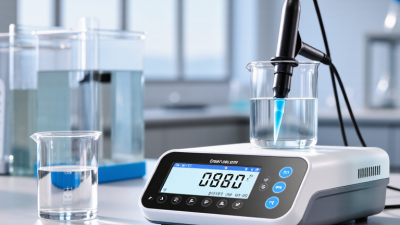
How to Choose a Professional Water Test Kit?
Choosing a professional water test kit begins with one uncomfortable fact: clear water is not necessarily safe water. Taste, color, and odor can remain normal while lead, nitrate, arsenic, bacteria, or excessive hardness are present. The World Health Organization’s Guidelines for Drinking-water Quality identify microbial contamination as a major public-health concern. The WHO and UNICEF Joint Monitoring Programme also reported that 2.2 billion people lacked safely managed drinking water in 2022. Testing is not a luxury for laboratories. It is a practical risk-checking habit.
Dr. Joseph Cotruvo, a former U.S. Environmental Protection Agency scientist and drinking-water consultant, has repeatedly stressed a simple principle: “You need to test water to know what contaminants are present.” That idea should guide every purchase. A professional water test kit should match the suspected contaminant, required detection limit, sample type, and testing environment. EPA Method 200.8, for example, uses laboratory-based analysis for trace metals, while field kits often provide faster screening. Speed is useful. It is not the same as confirmation.
Look closely at calibration, reagent shelf life, sample handling, and result documentation. A bright color chart can feel reassuring. It may still hide uncertainty. No kit is perfect, and some instructions are easier to misunderstand than manufacturers admit. The U.S. EPA’s Consumer Confidence Report guidance reinforces the value of verified water-quality information, especially when public supplies or private wells are involved. This guide will compare accuracy, usability, certification, and professional support, helping readers choose evidence over attractive packaging.

What Defines a Professional Water Test Kit?
How to Choose a Professional Water Test Kit?
What Defines a Professional Water Test Kit?
A professional water test kit is defined by evidence, not by its box or price. It should state detection limits, testing ranges, approved methods, and expected accuracy. The method must match the water source. A private well, aquarium, cooling system, and municipal supply require different measurements.
Reliable kits include calibration guidance, blank tests, duplicate testing, and clear sample handling instructions. They may measure pH, turbidity, conductivity, chlorine, nitrate, hardness, and selected metals. For microbiological safety, the World Health Organization states that E. coli should not be detectable in any 100-millilitre drinking-water sample. That detail matters. A color change alone cannot prove safety.
The WHO and UNICEF Joint Monitoring Programme reported that 2.2 billion people lacked safely managed drinking water in 2022. This figure shows why practical testing matters, especially where laboratory access is limited. Still, a field kit has limits. It can flag a problem, but it may not identify every contaminant. I have seen users trust a clean-looking sample too quickly. Appearance is weak evidence.
Tips: Check the reporting units before buying. Choose a kit with traceable calibration materials and a lot number. Keep samples cool, label collection time, and avoid touching the bottle opening. Compare unusual results with an accredited laboratory. Retest when results seem surprising. That small step prevents false confidence.
Which Water Quality Parameters Should You Measure?
Choosing a professional water test kit starts with the water’s intended use. Drinking water requires different measurements than aquarium, pool, agricultural, or industrial water. A kit should not merely offer many tests. It should measure relevant risks accurately.
Begin with pH, temperature, turbidity, conductivity, and total dissolved solids. These provide a quick picture of changing water conditions. Chlorine matters when water is disinfected. Hardness and alkalinity help explain scale formation and unstable pH. For agricultural sources, measure nitrate and nitrite carefully. Ammonia may also matter, especially near livestock areas or polluted runoff.
Potentially harmful metals deserve special attention. Lead, copper, iron, manganese, and arsenic require methods with suitable detection limits. A cheap color change is not automatically reliable. Microbiological testing is equally important. Total coliforms and E. coli can indicate contamination that ordinary chemical tests cannot detect. Some kits offer field screening only. Confirm serious or unusual results through an accredited laboratory.
Sampling affects every result. Use a clean container, avoid touching the inside, and record the date, location, temperature, and recent rainfall. Calibrate electronic meters as instructed. Replace expired reagents. Color matching is imperfect, especially under weak lighting. Even experienced users can misread subtle shades. That matters. Test duplicates when results seem surprising, and compare them with previous readings. A professional kit should provide clear instructions, safety information, quality controls, and realistic accuracy claims. Fancy equipment cannot repair poor sampling.
How to Choose a Professional Water Test Kit?
Which Water Quality Parameters Should You Measure?
A professional water test kit should cover parameters that indicate chemical contamination and treatment performance.
The chart shows selected WHO guideline values for drinking-water chemicals, expressed in milligrams per liter (mg/L).
pH, turbidity, free chlorine, and microbiological indicators should also be measured because they require different units and testing methods.
Lower guideline values for arsenic and lead indicate that highly sensitive instruments are required.
For a complete assessment, consider testing pH, turbidity, conductivity, total dissolved solids, nitrate, fluoride, arsenic, lead, copper, residual chlorine, and E. coli.
How to Match a Test Kit to Your Water Source?
Choosing a professional water test kit starts with identifying your water source. Tap water, private wells, rainwater, pools, and aquariums require different tests. A municipal supply may need chlorine, lead, copper, and pH checks. Well water often requires nitrate, iron, manganese, hardness, and bacteria testing. Rainwater may need acidity and microbial screening.
Match the kit to your daily use and local risks. For drinking water, choose a kit with clear detection limits and laboratory confirmation options. For pools, free chlorine, total alkalinity, pH, and cyanuric acid are practical choices. Aquarium testing requires ammonia, nitrite, nitrate, and hardness measurements. Read the instruction sheet before buying. Some kits measure strips quickly, while professional reagents provide more controlled results. I have seen users select a broad kit, then ignore the tests that matter most. More tests do not always mean better testing.
Tips: Collect samples in clean containers. Let tap water run briefly before sampling. Test at the same time when comparing results. Keep reagents away from heat and sunlight. Check expiry dates carefully. If results seem unusual, repeat the test and consider an accredited laboratory. A home kit is useful, but it is not infallible. Interpretation can still be difficult.
How to Verify Kit Quality, Certification, and Ongoing Costs?
A professional water test kit should prove its quality before it proves your water is safe. Check the seal, lot number, expiration date, and storage instructions. Reagents exposed to heat may produce unreliable colors. That detail is easy to miss.
Certification requires careful checking. A printed compliance logo is not enough. Find the issuing organization, certificate number, test scope, and validity period. Confirm that the method matches your target, such as lead, bacteria, hardness, or chlorine. An accredited laboratory report can support the manufacturer’s claims, but it should identify the tested model and method. Local regulations may also require certified testing for drinking water decisions. Read the fine print.
Test the kit with a blank, control, or known reference solution when available. Follow the stated sample volume and waiting time. Use a timer. Compare colors under neutral daylight, not beneath a yellow kitchen lamp. In practical testing, repeated readings can differ when the color scale is subtle. My own first comparison would have been more reliable with better lighting. That was a useful correction.
Ongoing cost matters more than the purchase price. Estimate replacement reagents, shipping, batteries, calibration materials, and confirmatory laboratory tests. Some kits require special storage or frequent recalibration. Keep a simple testing log with dates, lot numbers, results, and unusual water conditions. A low-cost kit becomes expensive when its consumables are unavailable. Choose transparent instructions, traceable quality records, and support that answers technical questions clearly.