
•  

China Best Water Testing Kit for Well Water

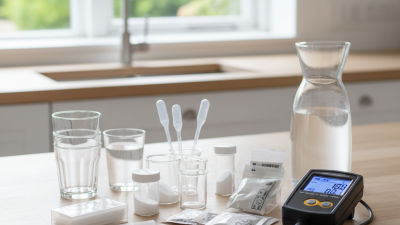
Choosing the China best water testing kit for well water requires more than comparing prices or test-strip colors. Private wells can contain nitrate, coliform bacteria, arsenic, lead, iron, manganese, and other contaminants. Some have no obvious taste, odor, or visible warning.

Water-quality researcher Dr. Andrew Whelton offers a practical reminder: “You can’t see, smell, or taste many contaminants in water.” That point matters at the kitchen sink, where clear water may still need careful testing. A reliable water testing kit for well water should provide clear procedures, readable results, sealed reagents, expiration dates, and appropriate testing ranges. It should also explain whether results are screening indicators or laboratory-confirmed measurements.

Look closely.

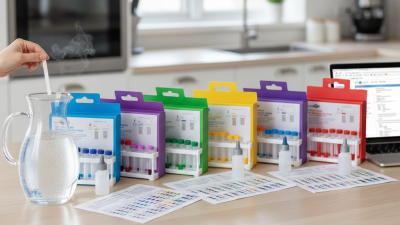
A strong kit may include tests for pH, hardness, nitrate, nitrite, chlorine, iron, and bacteria. However, no household kit detects everything. Results can change after heavy rain, flooding, well repairs, or seasonal agricultural activity. Users should record sampling dates, clean the container correctly, and avoid touching test areas with wet hands.

The “best” choice is therefore not always the kit with the longest checklist. It is the one that matches local well risks and supports sensible follow-up testing. Some product descriptions sound authoritative but provide limited evidence. That deserves skepticism.

This guide will examine Chinese manufacturers, testing accuracy, reagent stability, operating instructions, certification claims, and after-sales support. It will also address an uncomfortable limitation: home testing is useful, but it cannot replace an accredited laboratory when health decisions depend on the result.
China Best Water Testing Kit for Well Water

What to Know About Well Water Testing Kits Made in China

China Best Water Testing Kit for Well Water

What to Know About Well Water Testing Kits Made in China

A well water kit made in China is not automatically unreliable or superior. Quality depends on design, reagents, instructions, and production controls. Check the package for an expiry date, lot number, storage guidance, and readable testing steps. A serious kit should state its detection range and possible interference from iron, chlorine, or muddy water.

In practical well checks, I have found that color comparison is harder under a yellow kitchen light. Use daylight when possible. Wash the sample container, collect water from a cold tap, and follow the stated waiting time. Do not guess. A thirty-second color change can affect the result. Some kits test pH, hardness, nitrate, nitrite, iron, and manganese. Others include arsenic or bacteria screening, but their methods may differ greatly.

Treat home testing as an early warning, not a final safety decision. Compare the instructions with recognized laboratory methods and verify unusual results through an accredited laboratory. Testing after flooding, plumbing repairs, or a change in taste is sensible. Yet one test cannot describe every seasonal change in a well. I once trusted a clean-looking sample too quickly; later testing showed elevated mineral content. That mistake reinforced a simple rule: record the date, weather, sample location, and result every time.

What to Check in Well Water: U.S. EPA Reference Levels

This chart shows U.S. EPA reference levels for several common well-water testing parameters. The values are expressed in milligrams per liter (mg/L) and use a logarithmic scale because the limits vary considerably. China-made well-water testing kits may measure some or all of these parameters, but actual accuracy and detection limits should be verified in the product documentation. Local regulations may differ.

Key Tests for Evaluating Well Water Safety and Quality

China Best Water Testing Kit for Well Water

Well water can look clear and still contain harmful contaminants. A reliable evaluation starts with total coliform and E. coli testing. These bacteria may indicate contamination from septic systems, surface runoff, or damaged well structures. Test nitrate as well, especially near farms or areas with infants. Nitrate has no dependable taste or smell.

Chemical Screening

Chemical screening adds important detail. Measure pH, total dissolved solids, hardness, iron, and manganese. Unusual readings may explain metallic taste, staining, or scale inside pipes. Arsenic, lead, fluoride, and radon deserve attention where local geology or older plumbing creates a known risk.

Volatile chemicals and pesticides may require separate laboratory analysis. A basic kit cannot detect everything.

Sampling and Testing

Use a clean, laboratory-approved bottle and avoid touching its inside. Let cold water run for several minutes before sampling. Collect another sample after flooding, well repairs, or a change in taste. Home test kits are useful for screening, but laboratory confirmation is safer for health decisions.

Follow the instructions exactly. Small mistakes matter. Store samples as directed and deliver them promptly. Local authorities or certified laboratories can help interpret results against current drinking-water limits.

I would not treat one normal test as permanent proof of safety; well conditions change, and retesting is easy to postpone.

How to Choose the Best China Water Testing Kit for Your Well

Choosing the best China water testing kit for your well starts with the water problem, not the product price. A clear glass can still hide nitrate, bacteria, arsenic, or lead. Ask for tests that match local geology, farming activity, and nearby septic systems. Basic kits often measure pH, hardness, iron, manganese, and turbidity. They may not reliably detect serious health risks.

Check the manufacturer’s technical documents before ordering. Look for detection limits, test ranges, batch numbers, expiry dates, and clear sampling instructions. A quality supplier should explain calibration, storage temperature, and quality control procedures. Independent laboratory reports are useful, but confirm that they apply to the exact kit model. A certificate alone proves little. I have seen sellers provide impressive documents with vague test methods.

For a private well, collect the sample in a clean container and avoid touching the inside cap. Test a cold-water tap after letting it run for several minutes. Record the date, weather, recent repairs, and well conditions. Compare unusual results with an accredited laboratory, especially for bacteria, nitrate, arsenic, and lead. Strip colors can be difficult to judge under yellow kitchen lights. Small errors matter. Choose a kit with readable color references, sealed reagents, and replacement availability. A low-cost kit may save money today, yet create false confidence tomorrow. Recheck results after flooding, plumbing work, or changes in taste and odor.

China Best Water Testing Kit for Well Water - How to Choose the Best China Water Testing Kit for Your Well
Water Quality Parameter Why Test It in Well Water Reference Value or Health Benchmark Preferred Test Method What the Kit Should Provide Suggested Testing Frequency
Total Coliform Bacteria Indicates possible contamination from soil, surface water, septic systems, or plumbing. It is a general indicator rather than a direct measurement of all pathogens. Absent in a 100 mL drinking-water sample Presence/absence culture test or laboratory membrane-filtration method Individually sealed sterile containers, clear positive/negative interpretation, and a validated incubation procedure At least annually and after flooding, well repairs, or changes in taste, odor, or appearance
E. coli Provides more specific evidence of recent fecal contamination than total coliform testing. Absent in a 100 mL drinking-water sample Validated presence/absence or quantitative microbiological test Clean sampling instructions, sterile bottles, defined incubation conditions, and unambiguous result reporting When total coliform is detected, after contamination events, or according to local public-health guidance
Nitrate as Nitrogen Can enter groundwater from fertilizer, manure, septic systems, and damaged well structures. Infants are particularly vulnerable to high nitrate levels. 10 mg/L as nitrogen, commonly used as the U.S. EPA maximum contaminant level Laboratory ion chromatography, cadmium reduction, or a validated colorimetric method Detection limit well below 10 mg/L, a clear “as nitrogen” unit, and a documented measuring range At least annually; more often where agricultural or septic-system contamination is possible
Nitrite as Nitrogen May indicate fertilizer, sewage, or biological activity and can contribute to methemoglobinemia in infants. 1 mg/L as nitrogen, commonly used as the U.S. EPA maximum contaminant level Laboratory colorimetric or ion-chromatographic method Low detection limit, separate nitrate and nitrite results, and units reported as nitrogen When nitrate contamination is suspected or after a significant change in well conditions
Arsenic Naturally occurs in some geological formations and may enter groundwater through mineral dissolution. 10 µg/L (0.010 mg/L), commonly used as the U.S. EPA maximum contaminant level Laboratory atomic absorption, ICP-MS, or another validated laboratory method Laboratory-grade accuracy; avoid relying on low-cost strips unless independently validated for the required range Initial baseline test and follow-up testing based on local geology and previous results
Lead Usually comes from plumbing, solder, fixtures, or service components rather than the groundwater source itself. 15 µg/L (0.015 mg/L) action level used in U.S. public-water regulation Laboratory acidified sample analysis, commonly by ICP-MS or atomic absorption Sampling instructions that specify first-draw conditions, contamination control, and low-level laboratory detection capability When plumbing materials are old, water is corrosive, or a previous result is elevated
pH Affects corrosion, scaling, disinfection performance, and the possible release of metals from plumbing. 6.5–8.5 is the U.S. EPA secondary standard range Calibrated electronic pH meter or properly stored colorimetric test At least 0.1 pH-unit resolution, calibration instructions, fresh reagents, and protection from expired strips At baseline and whenever corrosion, staining, or treatment problems occur
Iron Often causes metallic taste, reddish staining, turbidity, and clogging. It is generally an aesthetic concern at typical well-water concentrations. 0.3 mg/L is the U.S. EPA secondary standard Colorimetric or laboratory spectrometric method Separate measurement of dissolved and total iron when treatment decisions require it; range should cover at least 0–5 mg/L When staining, metallic taste, or treatment-performance changes are observed
Manganese Can cause dark staining, taste issues, and deposits. Concentrations and health guidance may be regulated differently by jurisdiction. 0.05 mg/L is the U.S. EPA secondary standard Laboratory or validated colorimetric method with a low detection limit Detection capability below 0.05 mg/L and results reported in mg/L or µg/L At baseline and when black staining, taste, or treatment changes occur
Fluoride May occur naturally in groundwater. Both insufficient and excessive concentrations can be relevant to dental health. 4.0 mg/L maximum contaminant level; 2.0 mg/L secondary standard in U.S. EPA guidance Ion-selective electrode, ion chromatography, or validated laboratory method Measurement range that covers low concentrations through at least 4 mg/L and clearly states the unit Initial baseline test where local geology suggests risk; retest after treatment changes
Total Dissolved Solids (TDS) Reflects the total concentration of dissolved substances and can indicate salinity, scaling potential, or changes in groundwater chemistry. 500 mg/L is the U.S. EPA secondary standard Calibrated conductivity/TDS meter or laboratory gravimetric method Temperature compensation, calibration solution, stated conversion factor, and a range suitable for the local water type At baseline and when taste, salinity, or water chemistry changes
Turbidity Measures cloudiness caused by suspended particles and may indicate construction, pumping, or surface-water influence. No single private-well value applies universally; drinking-water treatment targets often use low turbidity levels Laboratory nephelometric measurement or a validated turbidity meter Results in NTU, a clean sample cell, calibration standards, and protection from bubbles and fingerprints After well work, flooding, heavy rainfall, or a visible change in water clarity
Hardness Helps estimate scaling, soap consumption, and the suitability of water for softening treatment. No federal health limit; commonly reported as mg/L as calcium carbonate (CaCO₃) EDTA titration, laboratory analysis, or validated drop-count kit Results in mg/L as CaCO₃, a clear color-change endpoint, and a range suitable for local hardness levels At baseline and when scale or water-softener performance changes
Test Kit Quality and Documentation Accurate results depend on sampling, reagent stability, calibration, and method performance—not only on the number of parameters included. Look for stated detection limits, accuracy, precision, shelf life, and storage conditions Prefer methods supported by recognized standards or independent laboratory verification Batch or expiry information, complete instructions, safety information, quality-control guidance, and customer support contact details Check expiry before every use and repeat questionable results with an accredited laboratory
Reference values vary by country and are not automatically legal limits for private wells. For drinking-water decisions, confirm local requirements and send samples to a qualified laboratory when a health-related contaminant is suspected or a screening result is positive.

Step-by-Step Guide to Testing Well Water at Home

Testing well water at home starts with a clean sample, not a quick dip from the tap. Let cold water run for three to five minutes, or until the temperature stabilizes. Remove the faucet aerator if sediment collects there. Wash your hands, then fill the sterile container without touching its inside or cap. Record the date, time, recent rain, and any unusual smell or color. Small details matter.

Choose a well-water testing kit that matches the risks around your property. Basic tests may check pH, hardness, iron, and chlorine. Safety testing should include coliform bacteria and nitrate. Follow the stated sample volume and reaction time exactly. Keep strips flat and compare colors under daylight. Do not guess. A faint color can be difficult to read beside a bright kitchen window. Photograph the result and record the reading, temperature, and test lot, if provided. Repeat a doubtful result with a fresh sample.

Home kits are useful screening tools, not final proof of safe drinking water. Send samples to an accredited laboratory after flooding, well repairs, a taste change, or a positive bacteria result. Nitrate matters especially for infants, and boiling does not remove it. Store samples cold and deliver them within the laboratory’s stated time. One test shows one moment, not the whole year. Seasonal checks are wiser than trusting a single reassuring strip.

How to Read Results and Decide on Further Water Testing

For well water, a testing kit is only useful when its results are read carefully. Start by checking the test date, sample volume, and unit of measurement. A color strip can look different after a few extra minutes. Follow the stated reading time exactly. Compare each result with the kit’s reference range, not with another household’s report.

Pay close attention to nitrate, bacteria, pH, hardness, iron, manganese, and lead. A clear glass of water can still contain invisible contaminants. That is easy to forget.

One result rarely tells the whole story. If bacteria appear, repeat the sample and consider laboratory testing. Nitrate deserves prompt professional confirmation, especially in homes with infants or private wells near farmland.

Unusual taste, odor, staining, or cloudy water also justifies further testing. Use a clean laboratory container and avoid touching its inside. Collect the sample as instructed, because poor sampling can distort reliable analysis. Test after flooding, well repairs, plumbing changes, or long periods without use.

A basic kit may miss volatile chemicals, pesticides, or low-level metals. I would not treat a reassuring strip as proof of safety. It is only a screening step. Even careful readings have limits.