

•  

7 Tips for Buying the Right Hardening Oven?

Choosing the right Hardening Oven is not simply a matter of comparing temperature ranges and purchase prices. The decision affects hardness consistency, distortion, energy use, maintenance, and production reliability. A small variation across the chamber can leave one gear correctly hardened and another below specification.

Industry reports provide useful direction, but they do not replace plant-level testing. MarketsandMarkets’ Heat Treating Market research identifies automotive, aerospace, and industrial manufacturing as important demand sectors. Grand View Research also reports continued growth in the industrial ovens market, driven by automation, energy efficiency, and tighter process control. These trends make oven selection more technical than ever.

Dan Herring, widely known as “The Heat Treat Doctor,” repeatedly emphasizes a practical heat-treatment principle: you cannot control what you cannot measure. That warning should shape every buying decision. Ask for temperature-uniformity results, atmosphere-control data, load-test records, and documented calibration practices. Examine the details. Door seals, fan placement, thermocouple locations, and quench integration can determine real-world performance.

The lowest quotation may hide expensive compromises.

A reliable Hardening Oven should match your parts, loading pattern, cycle time, and future capacity. Review the supplier’s service response, spare-parts access, and operator training. Request references from manufacturers processing similar steels. A brochure may promise ±5°C uniformity, yet actual results can change with load density and fixture design.

These seven buying tips offer a practical framework. Still, no checklist is perfect. Your production floor may reveal problems that laboratory data misses. Testing the oven with representative loads remains one of the most dependable steps before committing capital.
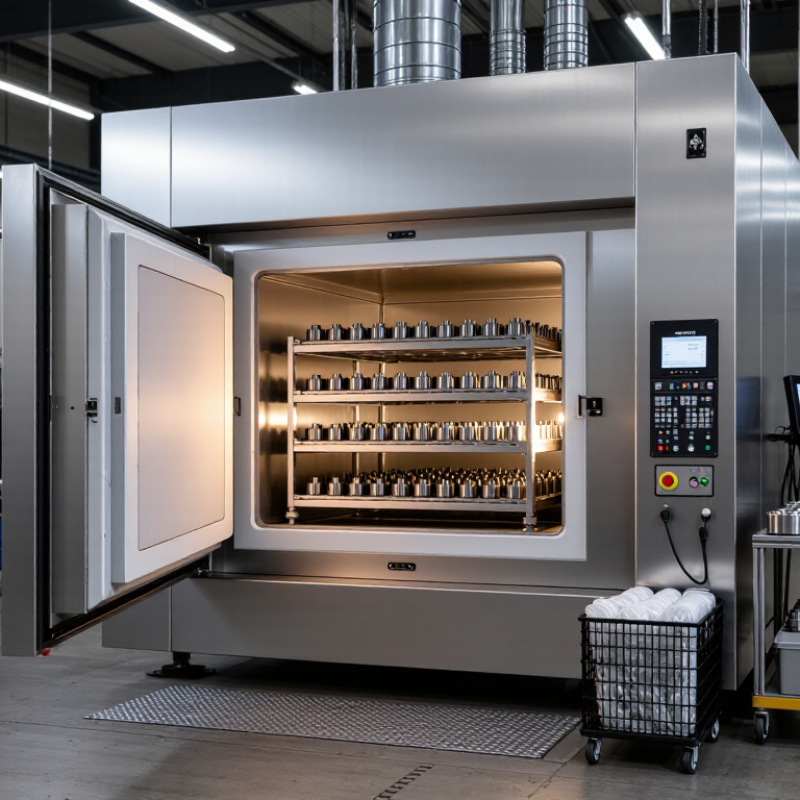
7 Tips for Buying the Right Hardening Oven?

Define the Hardening Oven’s Purpose and Required Heat-Treatment Process

Before comparing a hardening oven, define the exact heat-treatment job it must perform. A small steel pin may need a different cycle than a thick tool plate. Identify the material, target hardness, part dimensions, batch weight, and required production rate. Then document the full process: heating rate, austenitizing temperature, holding time, atmosphere, quenching method, and tempering temperature.

In practical equipment reviews, I check whether the usable work zone fits the parts without crowding. Crowding can create uneven heating. I also examine temperature uniformity, controller accuracy, thermocouple placement, and recovery time after loading. Ask for test data from the actual working range, not only the advertised maximum temperature. A furnace reaching 1,100°C may still be unsuitable for a process requiring tight control at 840°C.

Small details matter. Door seals, insulation, airflow, loading shelves, and safety interlocks affect daily reliability. Consider whether the oven supports recording and traceability for each cycle. That evidence helps when hardness results vary. Do not overlook cooling requirements. Some hardening processes need a separate quench system, while others require controlled cooling inside the chamber. I have seen specifications chosen around temperature alone, which was a mistake. The process, load, and verification method should guide the purchase. Otherwise, an impressive oven may produce inconsistent parts.

Set Temperature, Atmosphere, Capacity, and Load Requirements

7 Tips for Buying the Right Hardening Oven

Set Temperature, Atmosphere, Capacity, and Load Requirements

Start with the actual hardening recipe, not a preferred oven size. Define the operating temperature, tolerance, ramp rate, and holding time. Ask for documented temperature uniformity across the working zone. A display reading alone proves little. Place sample thermocouples near corners and the center during testing. That reveals cold spots.

Specify the atmosphere carefully. Air may suit some materials, while controlled nitrogen or another process gas may reduce oxidation. Confirm gas purity, flow stability, sealing, and exhaust requirements. Temperature recovery also matters after opening the door. A slow recovery can change hardness and increase production delays. It is an easy detail to underestimate.

Calculate capacity from real loads, not empty chamber dimensions. Include racks, trays, spacing, and future production growth. Heavy fixtures can block circulation and create uneven heating. Leave enough clearance around each part. I once saw a well-sized oven perform poorly because stacked loads restricted airflow. That mistake was avoidable. Check electrical supply, floor space, ventilation, maintenance access, and data recording before approval. Request acceptance testing with your material and representative load. Specifications can look perfect on paper. Process evidence is more reliable. One compromise may remain, but it should be understood before purchase.

Compare Oven Designs, Heating Methods, and Temperature Uniformity

Buying the right hardening oven starts with its design. A batch oven suits mixed loads and changing part sizes, while a continuous oven supports steady production. Chamber volume matters, but airflow matters more. A large chamber with weak circulation can leave corners colder than the center. That defect is easy to miss.

Heating method also affects control and operating cost. Electric resistance heating offers clean, responsive control for many metal-treatment applications. Gas-fired systems may suit larger chambers, but combustion design can create temperature gradients. The U.S. Department of Energy reports that process heating represents about 51% of energy use in U.S. manufacturing. Therefore, insulation, door sealing, and heat recovery deserve careful attention, not just the purchase price. I once favored higher power without checking insulation. That shortcut was not wise.

Temperature uniformity should be verified under loaded conditions. Ask for temperature uniformity surveys, sensor locations, calibration records, and recovery-time data. AMS2750H provides structured requirements for furnace classification, surveys, and instrument calibration. Do not accept a single empty-chamber reading as proof of performance. Load patterns can block airflow and create uneven zones. The National Institute of Standards and Technology emphasizes traceable measurement as the basis for reliable temperature decisions. In practice, map the chamber with several sensors, then repeat the test using a realistic load. Perfect uniformity may be unrealistic, but unexplained variation is unacceptable.

Evaluate Energy Use, Controls, Safety Features, and Maintenance Needs

7 Tips for Buying the Right Hardening Oven

Evaluate Energy Use, Controls, Safety Features, and Maintenance Needs

Tip 1 Check the oven’s energy consumption at your expected operating temperature. Ask for real test data, not only promotional estimates. Insulation quality, door seals, and heating cycles strongly affect electricity use.

Tip 2 Compare recovery time after loading cold parts. Faster recovery may improve output, but it can increase peak power demand.

Tip 3 Examine the control system carefully. Clear temperature displays, programmable recipes, and data logging support consistent results. Password protection also helps prevent accidental changes. Keep it simple.

Tip 4 Confirm that temperature sensors are placed where parts actually sit. A sensor near the heater may show a misleadingly stable reading.

Tip 5 Review safety features, including over-temperature protection, door interlocks, alarms, and emergency shutdown access. Operators should understand these features before production begins.

Tip 6 Estimate maintenance needs from the service manual. Ask how often seals, sensors, filters, and heating elements require inspection. Easy access can reduce downtime and technician exposure to hot surfaces.

Tip 7 Consider spare parts availability and calibration support. A cheap oven becomes expensive when one sensor causes a week-long delay.

One practical warning: energy calculations are often optimistic. Measure your actual loading pattern, idle time, and local electricity cost before deciding. No checklist catches every failure, so leave room for a trial run and independent temperature verification.

Check Compliance, Supplier Support, Warranty, and Total Ownership Cost

Buying the right hardening oven requires more than comparing temperature ranges and chamber sizes. Check compliance documents before discussing price. Ask for electrical, fire-safety, emissions, and workplace certifications relevant to your installation site. Request test records, calibration procedures, and factory acceptance data. A polished certificate is not enough. Confirm that the actual configuration matches the paperwork.

Supplier support becomes important after delivery. Ask who handles commissioning, operator training, troubleshooting, and software updates. Clarify response times and spare-part availability in writing. A useful supplier should explain maintenance tasks clearly, not hide behind technical language. Speak with existing users if possible. Their experience may reveal delays that sales presentations never mention.

Review the warranty line by line. Check coverage for heating elements, controls, sensors, labor, and travel costs. Identify exclusions caused by poor maintenance or unsuitable utilities. Then calculate total ownership cost, including energy use, installation, ventilation, calibration, repairs, downtime, and disposal. A low purchase price can become expensive during repeated production cycles. I once underestimated commissioning work. That mistake changed the budget. Leave room for unexpected training and validation needs. Also compare service contracts carefully, because the cheapest option may provide the slowest support.

7 Tips for Buying the Right Hardening Oven? — Check Compliance, Supplier Support, Warranty, and Total Ownership Cost
Tip Buying Dimension What to Check Before Purchase Documents, Tests, or Questions to Request Why It Matters to Total Ownership Cost
1 Confirm Process and Load Requirements Start with the workload
  • Define the required operating temperature range, commonly up to approximately 1,000–1,200°C for many industrial hardening applications.
  • Specify work-zone dimensions, maximum batch mass, basket or fixture size, loading method, and production cycle time.
  • Check whether the oven is intended for air, inert-gas, or controlled-atmosphere processing.
  • Provide representative parts, fixtures, and load drawings.
  • Request a heat-up, soak, cooling, and recovery-time calculation based on the actual load.
  • Verify usable work-zone dimensions rather than only external equipment dimensions.
Correct sizing reduces underutilized capacity, excessive energy consumption, long cycle times, and the risk of purchasing a second oven because the first unit cannot handle future loads.
2 Check Standards and Compliance Compliance before price
  • Determine which customer, industry, safety, and quality requirements apply to the process.
  • For aerospace work, evaluate whether the equipment can support applicable AMS2750 requirements.
  • For automotive heat treatment, check whether the process must support customer-specific requirements such as CQI-9.
  • Review electrical, guarding, emergency-stop, ventilation, and local installation requirements.
  • Request a compliance matrix identifying each applicable clause and the proposed method of conformity.
  • Ask for sample calibration, temperature-uniformity, and system-accuracy documentation.
  • Confirm whether certification and validation costs are included in the quotation.
A compliant oven reduces audit findings, requalification work, product holds, customer complaints, and expensive retrofits after installation.
3 Evaluate Temperature Uniformity and Control Process consistency
  • Review the specified temperature-uniformity tolerance across the usable work zone.
  • Check the number, location, and type of control and recording thermocouples.
  • Assess controller resolution, alarm functions, data logging, recipe control, and over-temperature protection.
  • Confirm recovery performance after door opening or loading.
  • Request a temperature-uniformity survey using an agreed test load or empty-work-zone method.
  • Review sample trend charts and alarm histories from comparable applications.
  • Ask how calibration intervals, sensor replacement, and software backups are managed.
Stable control helps prevent under-hardened or over-heated parts, reduces scrap and rework, and supports repeatable metallurgical results.
4 Assess Atmosphere, Airflow, and Heat Transfer Match the furnace design to the material
  • Determine whether the process needs forced air circulation, inert gas, endothermic gas, vacuum, or another controlled atmosphere.
  • Check fan capacity, airflow distribution, heating-element arrangement, and load spacing requirements.
  • Review atmosphere monitoring, leak detection, exhaust, and interlock provisions where applicable.
  • Request airflow or temperature-mapping results for representative loads.
  • Ask for atmosphere-control ranges, sensor types, alarm limits, and calibration procedures.
  • Verify that fixtures and baskets are compatible with the operating temperature and atmosphere.
Proper heat transfer and atmosphere control can reduce oxidation, scale, distortion, gas use, post-cleaning, and premature replacement of heating components.
5 Compare Supplier Engineering and Service Support Support is part of the equipment
  • Evaluate application engineering, layout assistance, installation, commissioning, operator training, and process-development support.
  • Check local or regional access to technicians and critical spare parts.
  • Review remote diagnostics, response times, preventive-maintenance programs, and software support.
  • Request a written service-level agreement with response and escalation times.
  • Ask for a recommended spare-parts list and typical lead times.
  • Request references for installations with similar temperature, load, and compliance requirements.
Fast technical support reduces unplanned downtime, production interruptions, emergency freight, and dependence on a single highly specialized employee.
6 Review Warranty, Exclusions, and Lifecycle Responsibility Read the fine print
  • Check warranty duration for the complete oven, controls, insulation, heating elements, fans, sensors, and major assemblies.
  • Identify exclusions for wear parts, misuse, utilities, contamination, unauthorized modifications, and maintenance.
  • Confirm who is responsible for commissioning, performance acceptance, and warranty travel costs.
  • Request the complete warranty terms before issuing a purchase order.
  • Ask for the expected service life and replacement criteria for heating elements, thermocouples, insulation, and door seals.
  • Confirm availability of compatible parts and technical documentation over the planned operating life.
Clear warranty coverage limits unexpected repair costs and helps the buyer budget replacement parts, planned shutdowns, and future upgrades.
7 Calculate Total Cost of Ownership Look beyond the purchase price
  • Include purchase, freight, installation, utilities, commissioning, validation, training, maintenance, calibration, and spare parts.
  • Estimate electricity or fuel consumption using the planned operating schedule and local utility rates.
  • Include downtime risk, expected component replacement, software fees, exhaust requirements, and end-of-life disposal.
  • Request a five- to ten-year operating-cost model with stated assumptions.
  • Compare energy use per batch or per operating hour at the expected production load.
  • Ask for maintenance intervals, typical labor hours, component prices, and estimated availability.
A lower purchase price may result in higher energy, maintenance, validation, and downtime costs. Comparing lifecycle cost supports a more reliable investment decision.